

First Peer-Reviewed Record of a Psychoactive Psilocybe in Greece
A study published this month in ACS Omega reports mycology and analytical chemistry results on a psychoactive Psilocybe species documented in Greece. The work was conducted at the National and Kapodistrian University of Athens (NKUA), with support from EPOPTEIA.
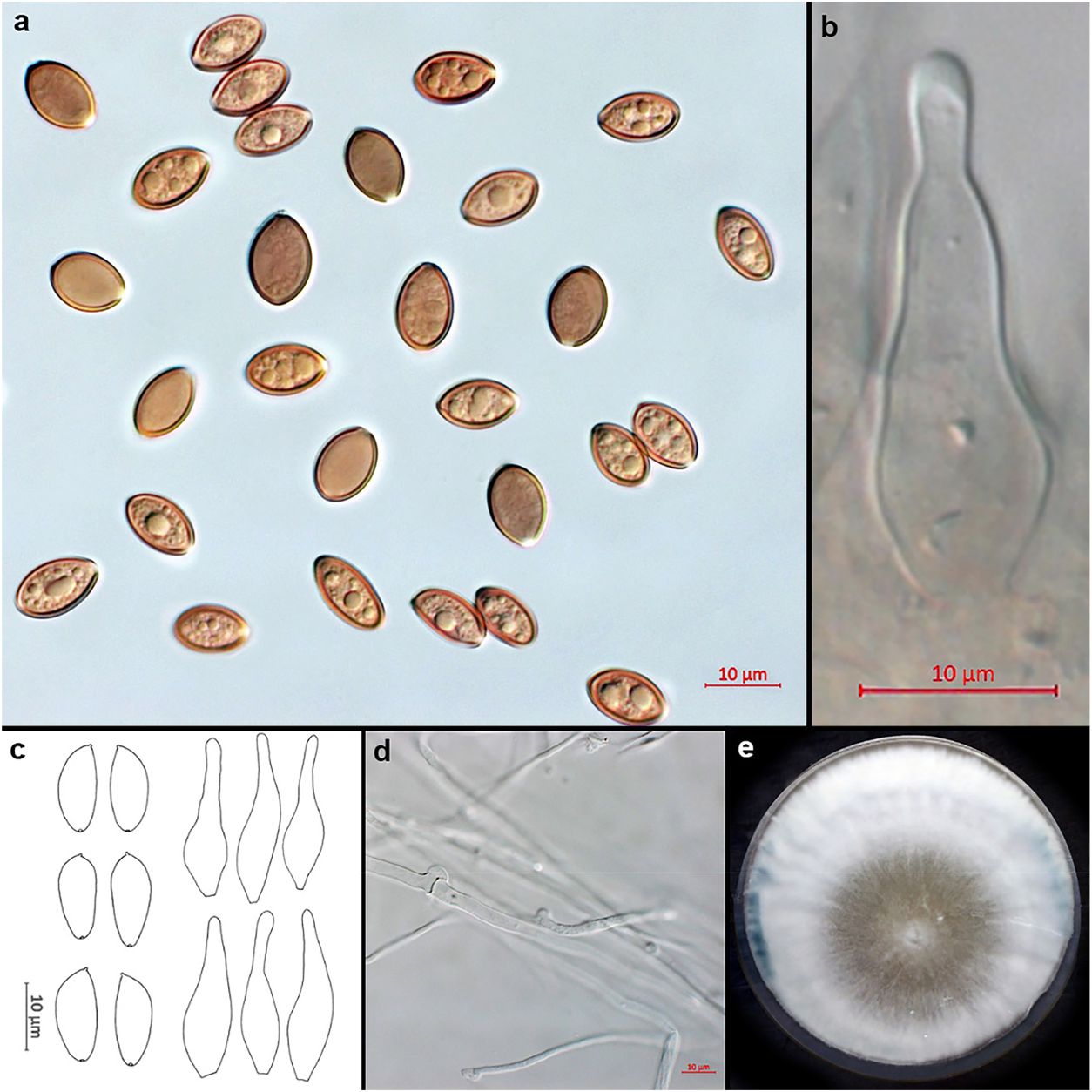
The study began with three preserved mushroom specimens held in NKUA’s fungal herbarium, the Mycetotheca ATHUM. They were collected in mountain forests of central Greece between 1999 and 2024. Based on their physical features, they had been assigned to Psilocybe cyanescens, a group that has since been shown to contain several distinct species. The researchers sequenced the specimens’ DNA, using the standard genetic barcode for fungi. All three were identified as Psilocybe serbica var. arcana. To the authors’ knowledge, this is the first documentation in the peer-reviewed literature of a psychoactive Psilocybe species occurring in Greece. The fungus is not new to Greece, however it’s presence is now established by molecular evidence in the scientific record.
Measuring psilocybin without controlled reference standards
Laboratories normally measure psilocybin and psilocin by chromatography, which relies on certified reference samples of each compound for comparison. Because both are controlled substances, many laboratories find these standards difficult or impossible to get.
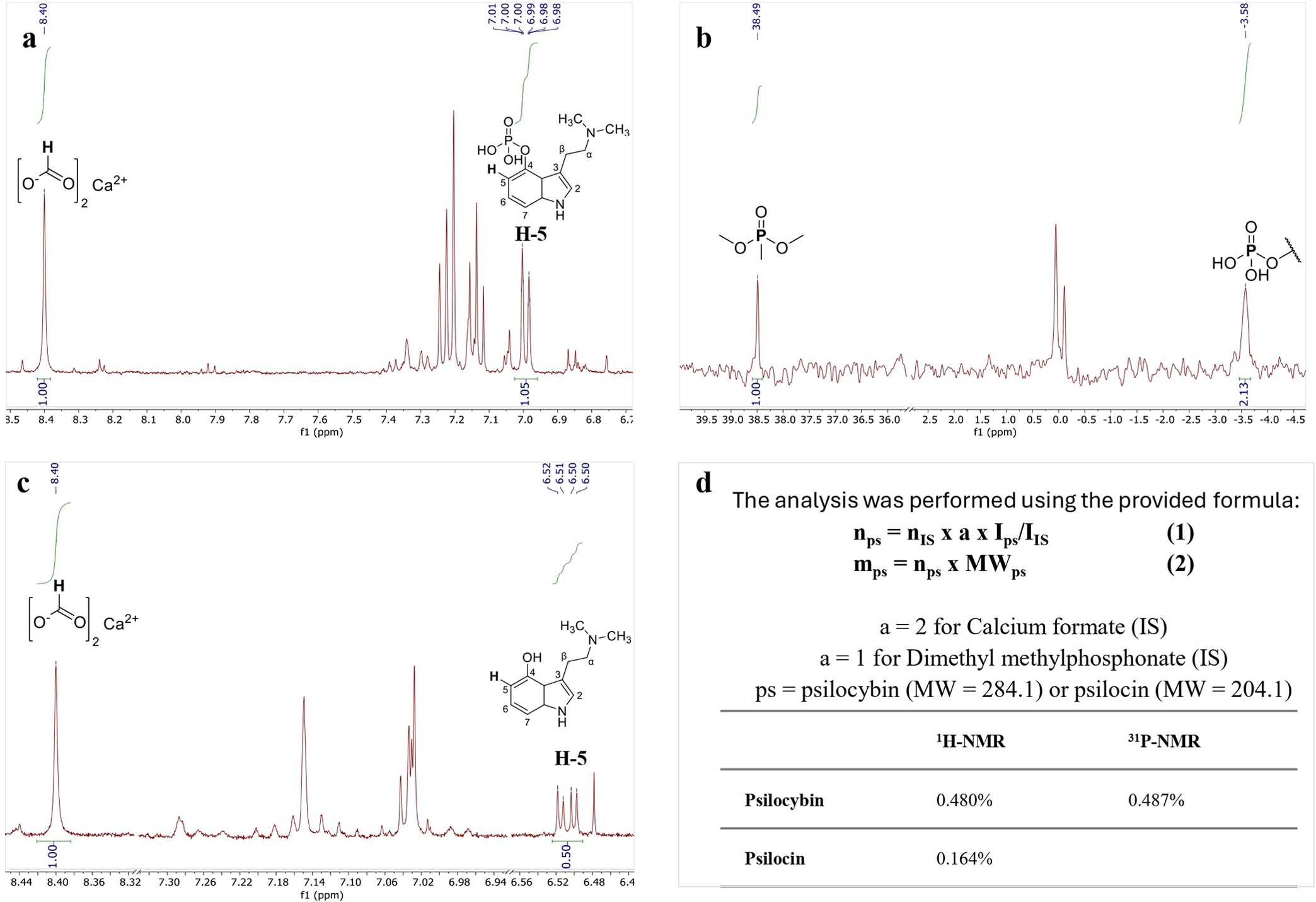
The team developed and validated two quantitative NMR (qNMR) methods that measure both compounds directly in fungal extracts. Neither method requires reference standards of either compound. Each method compares the target compound’s signal against a known amount of an unrelated, freely available internal standard:
Proton (¹H) qNMR measures psilocybin and psilocin through a distinctive signal from each molecule.
Phosphorus (³¹P) qNMR measures psilocybin through its phosphate group, which psilocin lacks. It gives an independent, chemically selective check on the proton result.
The two methods gave the same psilocybin value. Mass spectrometry confirmed the identity of both compounds. The results also agreed with a validated HPLC method run with certified standards at a licensed laboratory, the Caribbean Centre for Research in Bioscience at the University of the West Indies. Each NMR measurement takes under five minutes.
Scope and limitations
The herbarium specimens had been stored too long to retain measurable psilocybin. The chemical analysis was therefore carried out on mycelium cultured in the laboratory from one specimen. The concentrations reported apply to that cultured material, not to mushrooms growing in the wild. The methods were validated on a single isolate. Using them for other materials, or for any regulated purpose, will require validation for each specific application.
Reliable, accessible measurement underpins research quality control. That includes, with further validation, characterizing natural materials intended for production or clinical study. This study also adds to the documented record of Greece’s biodiversity, preserved in a Greek university collection and studied by Greek institutions.
Research team
The work was conducted at NKUA’s Laboratory of Pharmacognosy and Natural Products Chemistry under Prof. Prokopios Magiatis. Dr. Evangelos Dadiotis, Dr. Vangelis Mitsis and Romanos K. Antonopoulos were co-first authors. Contributors also included NKUA’s Department of Biology (Sections of Ecology and Systematics, and of Genetics and Biotechnology), the Institute of Mediterranean and Forest Ecosystems at ELGO-DIMITRA, and the Caribbean Centre for Research in Bioscience at the University of the West Indies.
Read the study (open access): Dadiotis E., Antonopoulos R.K., et al. “Direct Quantitation of Psilocybin and Psilocin by ¹H and ³¹P qNMR in Wild Psilocybe from Greece.” ACS Omega (2026). doi.org/10.1021/acsomega.5c13069
Psilocybin-containing fungi are controlled substances under Greek law. This post describes laboratory research and is not guidance on identifying or collecting fungi.
